an aakaar surface
animaterial
A simulation operating system — not an FEM package. You describe what a thing is and what it must do; animaterial lifts it to a semantic model, chooses how to solve it, and shows you the field.
open-source · local-first · structural today, multiphysics by design
The idea
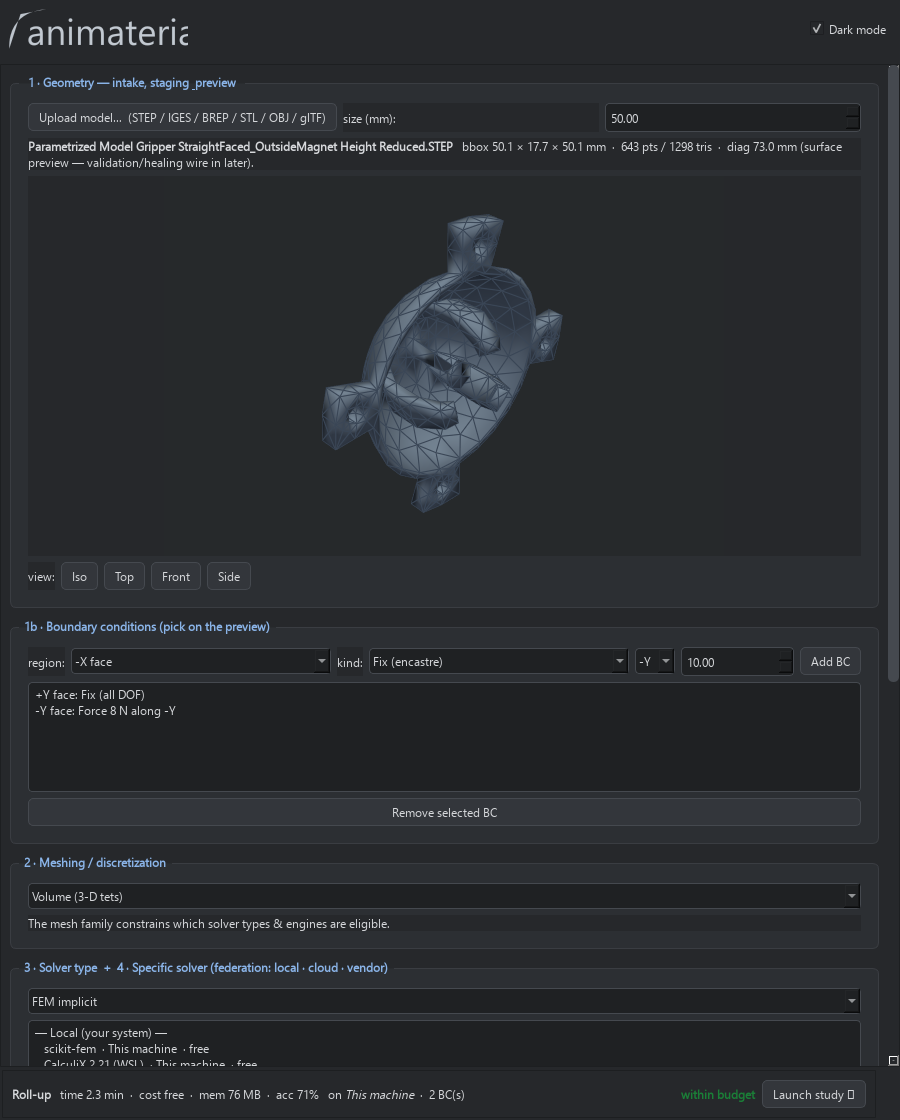
The central object is the Analysis Model — a feature graph, not the mesh. Animaterial never meshes raw CAD: it lifts geometry to a semantic model of typed features, chooses a solver, and only then discretizes the way that solver wants. A mesh is one option; for mechanisms there may be no mesh at all. Everything — geometry, meshing, solver, material, visualization — is a plugin, which is exactly how thermal / fluid / EM / biomechanics get added later without re-architecting.
Ingest a model (STEP / IGES / STL / glTF…), heal it, and lift it into a graph of typed features — beams, shells, solids, joints, contacts.
Choose a solver mode early, then attach boundary conditions, loads, connectors, and materials — symbolic expressions welcome.
Run one of four modes on whatever CPU / RAM / GPU the machine has, and return results as one universal Field ontology.
Four solver modes
One canonical model, four ways to solve it — chosen by what you're asking, each on its own open-source engine.
mechanisms, compliant & deployable structures — force paths & mechanical advantage
SymPy/SciPy (symbolic) + Taichi-XPBD
slender, large-deflection bodies — tapes, cables, continuum robots
PyElastica (+ SOFA)
impact, drop, fast transients, contact
CalculiX-explicit + Taichi
statics, modal, buckling, quasi-static
CalculiX (+ Code_Aster, FEniCSx)
Seeing it work
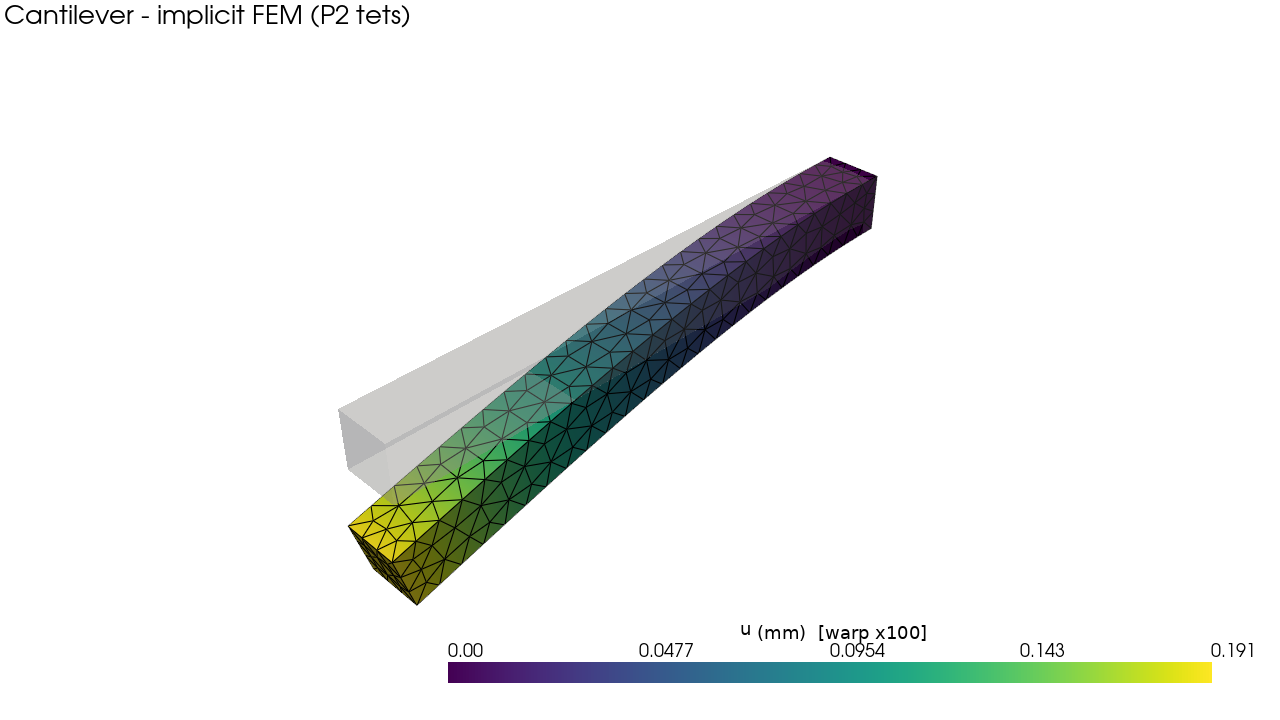
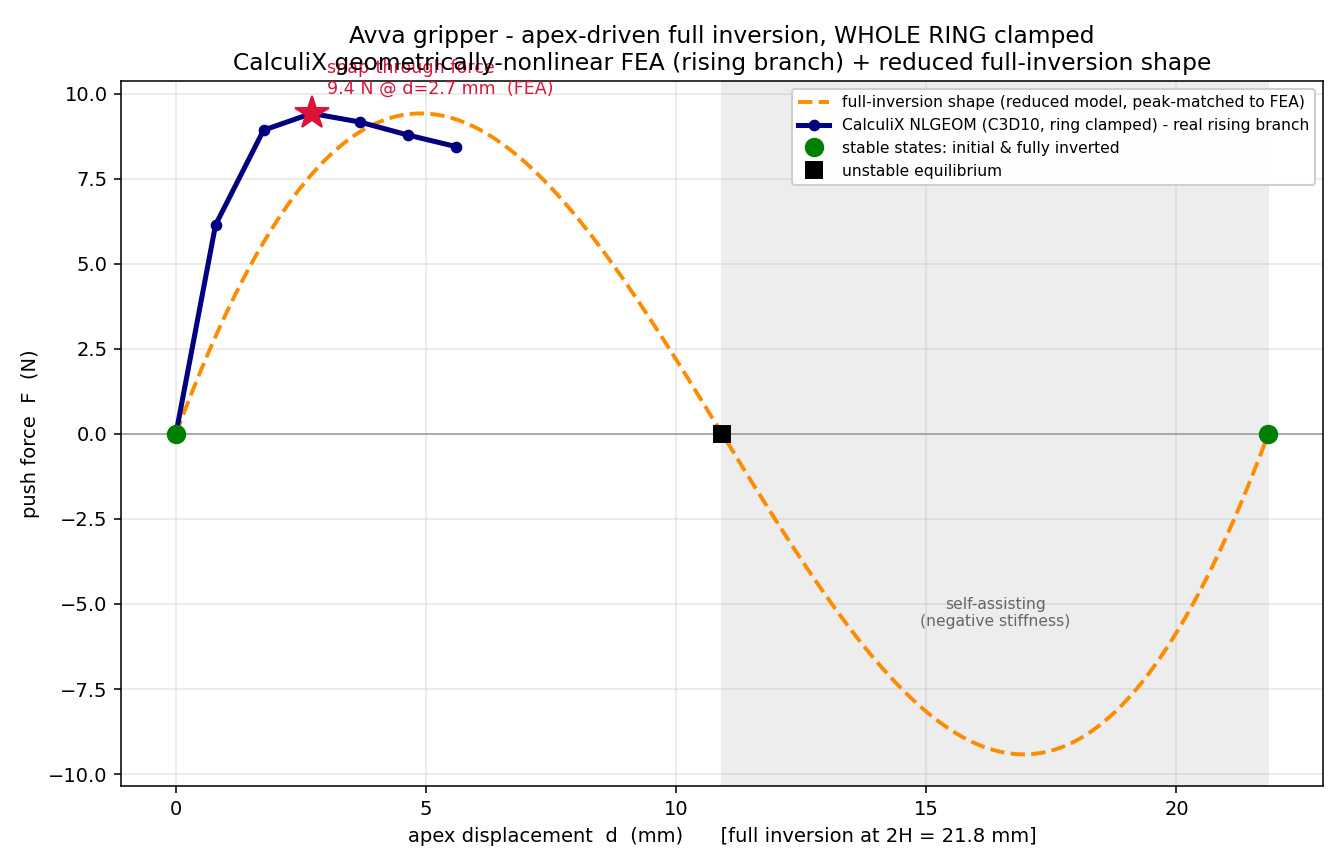
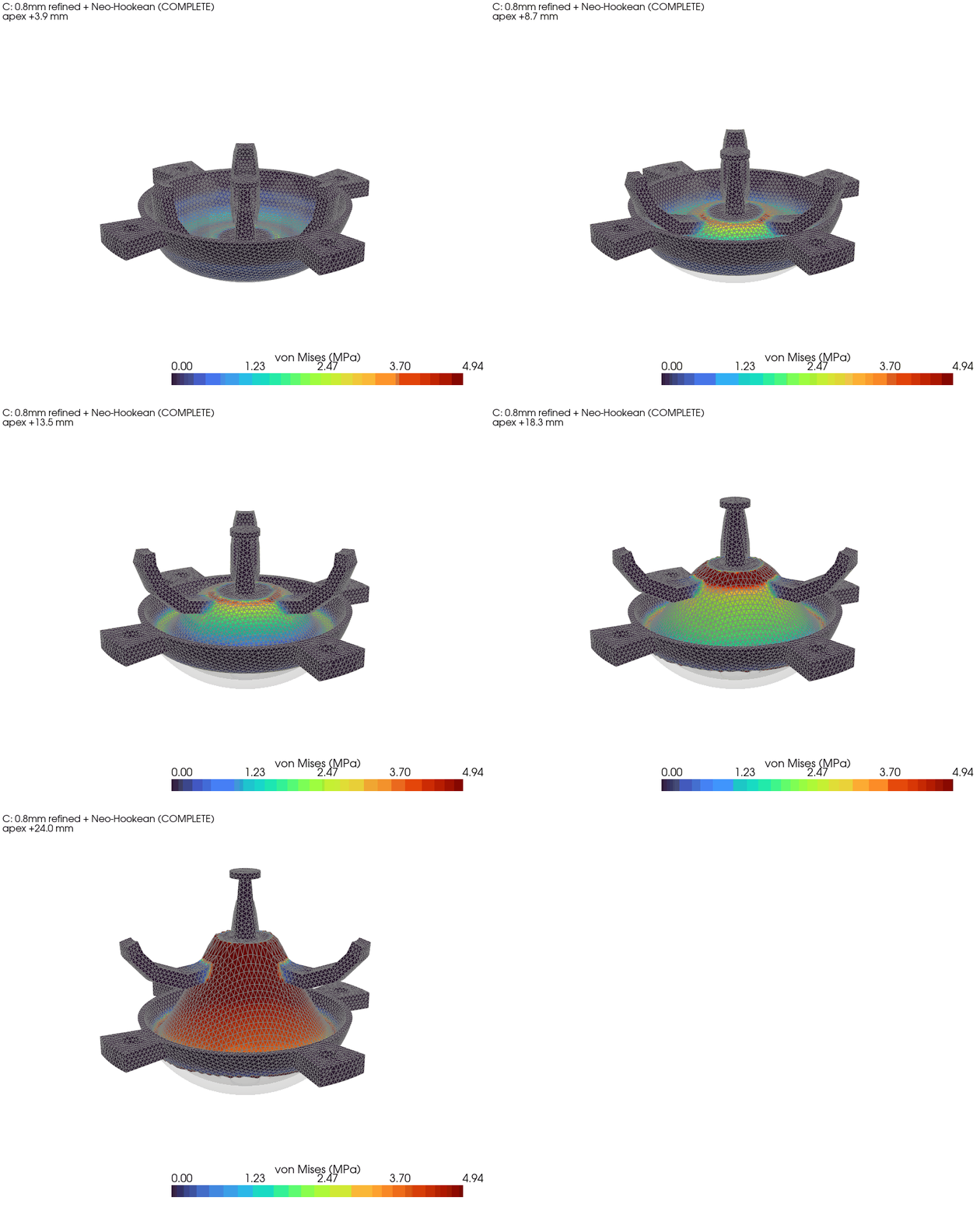
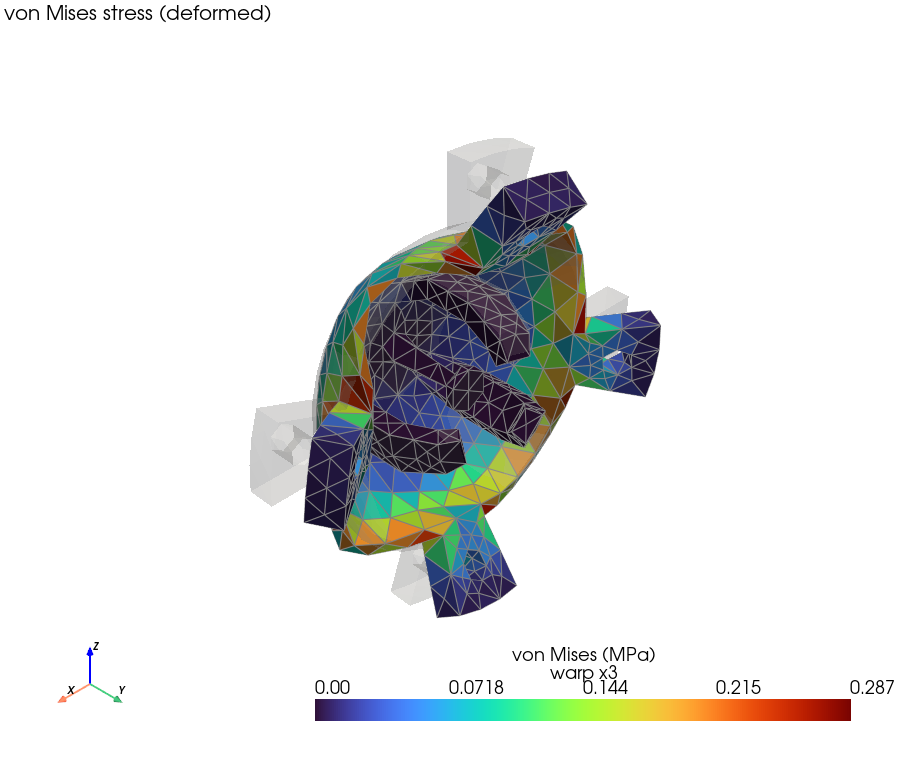
Real studies, run on open-source solvers — from a textbook-validated beam to a snapping compliant mechanism.
What it won't compromise
Every dependency carries an OSI-approved licence. No proprietary kernels.
Runs on your workstation, scales to its cores / RAM / GPU. Cluster & cloud are an optional backend.
Lift to a semantic feature graph first; the mesh is solver-driven, not the starting point.
Every plugin reads & writes the same Study and the same Fields — which is how multiphysics gets added without re-architecting.
Request a research preview
Animaterial is in research preview. Tell us what you'd simulate with it and we'll get you access — the request goes straight to the team.